Leak Detection in San Bernardino, CA
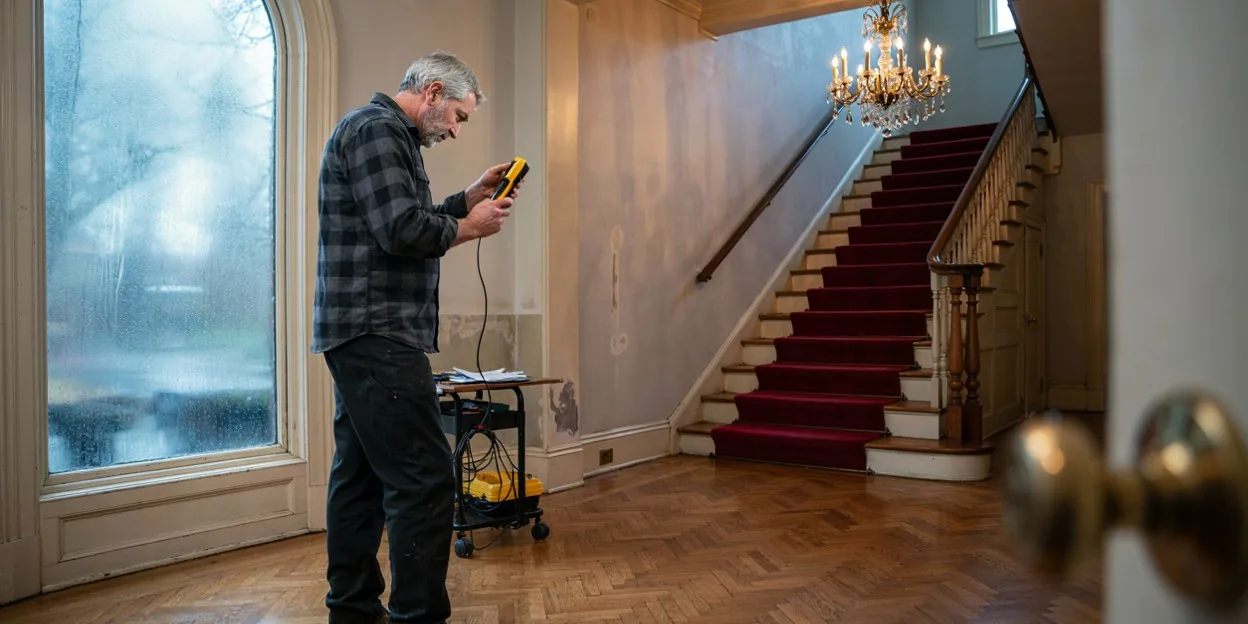
Your water bill came in at twice the usual amount, and the hallway floor by the bathroom door is warm under bare feet. Nothing drips. Nothing is wet that you can see. This site connects you by phone with an independent local provider who does leak detection in San Bernardino County.
What the crew does first
First they prove there is a leak. With every fixture off and the ice maker unplugged, they watch the meter at the sidewalk. If the low-flow indicator keeps turning, water is going somewhere. Then they isolate: closing the house valve tells them whether the leak is on the house side or in the yard line between the meter and the house.
To narrow it down, they use listening gear on the slab, pressure tests on the hot and cold lines separately, and a thermal camera to spot the warm stripe on the floor where a hot line is leaking. Under a valley slab, the hot side fails first. The goal is to mark a spot the size of a dinner plate before anyone brings out a concrete saw.
What to do in the next hour
Turn off every faucet, the washer, the sprinklers, and the ice maker, then go look at the meter. On most valley and High Desert lots it is in a box at the sidewalk or the edge of the driveway. Write down the reading and check it again in an hour.
If a floor is warm or you hear water running when nothing is on, turn the water heater down for now. A hot-side slab leak wastes gas as well as water. If you are on a private well in Apple Valley or Lucerne Valley, a pump that cycles all night with nothing running is the same clue. Do not start opening walls or chipping tile on your own.
What is usually saved and what is not
Finding the leak early usually means a small repair. Once the spot is marked, the fix is one of three things. Open the slab at that point and repair the pipe. Abandon the buried line and reroute a new one overhead through the attic and walls, which is common in homes where the copper has failed more than once. Or repipe the house. The provider you speak with can explain which one fits your home.
Flooring over the leak is the main casualty. Tile gets cut, and carpet or laminate over a wet slab often has to come up. Drywall and cabinets near a leak that ran for weeks may need structural drying once the pipe is fixed. If the wet spot is at the base of the tank in the garage, see water heater leak cleanup instead.
San Bernardino County notes
The valley was built fast. Tract after tract went up in San Bernardino, Rialto, Colton, Fontana, and Redlands from the late 1940s through the 1970s, almost all on slab-on-grade foundations with copper water lines set in or under the concrete. That copper is now sixty or seventy years old. Hard water from the local groundwater basins, hot summers, and soil that shifts as it wets and dries all wear the pipe from the inside.
Galvanized steel supply lines in the older homes near downtown San Bernardino and in Colton rust from the inside and lose pressure long before they leak. In the High Desert, the ground is sandy and the water table is deep, so a yard-line leak between the meter and the house can run for months without ever showing on the surface. Look for a green patch in the gravel or a spot where the dogs keep digging.
The classic signs are the same everywhere: a warm floor, a bill that climbs with no change in habits, a mildew smell from the carpet, and the sound of water at night. Many policies cover the sudden damage a leak causes but not the pipe repair itself, and a leak that ran for months may be treated as gradual. Ask the crew for the meter readings and a written note of where the leak was found for your adjuster. Slab cuts and reroutes usually need a plumbing permit from the city, or from the county in unincorporated areas. Ask the repair plumber who pulls it.
Calling about leak detection
Call (909) 494-5349 now and tell us what you see: where the floor is warm or the carpet is damp, what the bill did, whether the home is on a slab or a raised floor, and whether you have already shut off the main.