Structural Drying in San Bernardino, CA
The plumber fixed the pipe on Tuesday. You mopped, ran a box fan for two days, and the tile looks fine. But the baseboard in the hallway is starting to swell, and the closet at the end of it smells like a wet towel. This site connects you by phone with an independent local provider who does structural drying in San Bernardino County.
What the crew does first
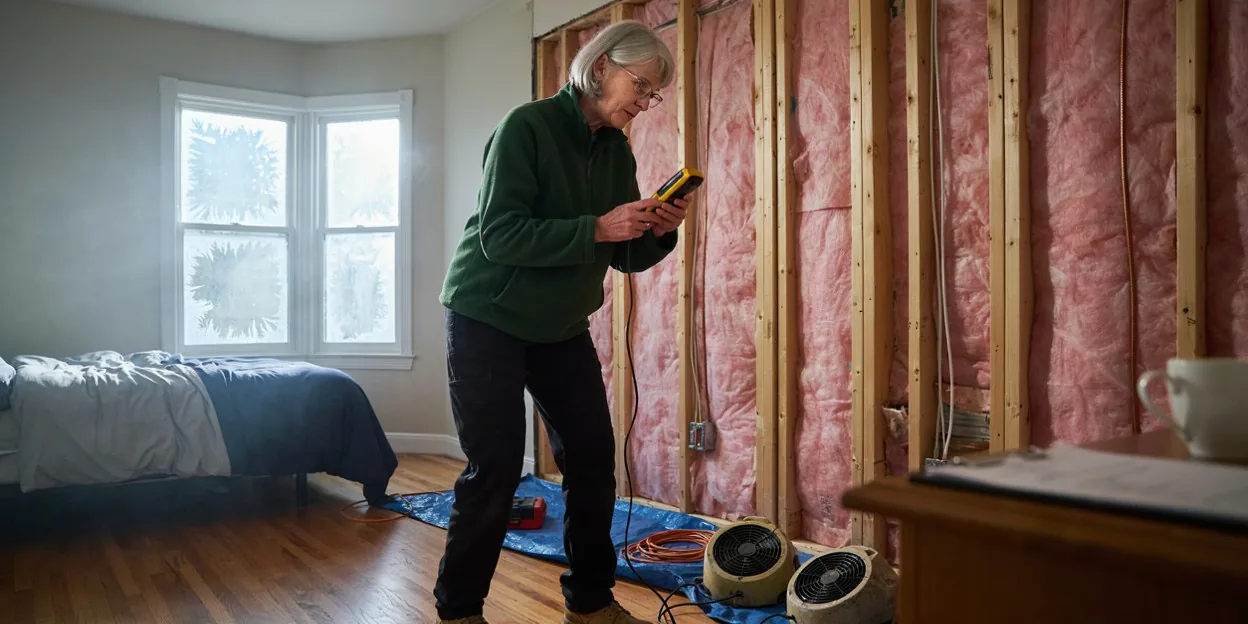
The crew meters before they plug anything in. They read the drywall at the base and a foot up, the wood framing where they can reach it, the subfloor or the slab, and the cabinets. They take a reading in a dry room for comparison, because drywall in a house that has been closed up in August reads differently than drywall in a mountain cabin in February.
Then they place equipment by the map. Air movers push air across wet surfaces so moisture leaves the material. Dehumidifiers pull that moisture out of the air so it does not settle somewhere else. Where a wall cavity is wet, they may drill small holes behind the baseboard and push air into the cavity rather than tearing the drywall out. They come back to read the meters and move equipment as the numbers change.
What to do in the next hour
Leave the equipment running if it is already in place. It is loud, and it is doing two different jobs at once. Keep windows closed, because dry Inland Empire air helps less than people expect once the dehumidifier is working, and a monsoon afternoon sends humid air right back in.
If no crew has been out yet, keep the box fan going and open cabinet doors under the sinks. Do not paint, caulk, or reinstall trim. Do not run a space heater against a wet wall. Take photos of the swelling and the stains, then call.
What is usually saved and what is not
Drywall that got wet but did not sit in water usually dries in place with a cavity-drying setup. Framing almost always dries. Solid wood flooring can often be dried with mats if it is caught before it buckles. Wet insulation in a wall or an attic usually comes out, because it holds water against the framing and does not dry. Particleboard and MDF come out once they swell.
Ask how progress will be checked and when the crew expects to pull the equipment. The answer should be a target reading, not a number of days. If the drying uncovers a leak that is still running, leak detection comes first. If the moisture is coming from above, see roof leak water damage.
San Bernardino County notes
Valley summers help and hurt. Outside air at 105 degrees and 15 percent humidity will dry a surface fast, but a closed house on a slab holds water in the concrete and in the bottom plate of every wall. Slab moisture wicks back up into new drywall if the concrete is not dried too, which is why the crew reads the slab and not just the wall.
Monsoon season flips the picture. In July and August, dew points climb and afternoon storms push humid air across the valley and the High Desert. Drying equipment placed by the readings keeps working. A box fan and an open window do not.
The mountains are the third case. A cabin in Lake Arrowhead or Running Springs sits at 5,000 to 6,000 feet, and after the February 2023 blizzard many of them were cold, closed up, and wet for weeks before anyone could get up the hill. A closed cabin at 40 degrees does not dry on its own. The crew brings heat as well as air movement, and they check the crawl space under the floor.
Drying does not need a permit. The rebuild that follows, if it replaces drywall or plumbing, usually does, through the city building desk or San Bernardino County Land Use Services in the unincorporated areas.
Calling about structural drying
Call (909) 494-5349 now and tell us what you see: when the water stopped, which rooms were wet, what is swelling or smelling damp now, and whether the house is on a slab or has a crawl space.