Water Damage Restoration in Highland, CA
Highland is two towns in one. Old Highland along Base Line and Palm Avenue dates to the 1890s citrus boom and has the valley's usual postwar slab tracts around it. East Highlands Ranch, built through the 1990s on the old ranch land above the Santa Ana River, is a planned community with an HOA, a lake, and thousands of two-story homes on slopes that drain toward the river.
The city sits right under the mountain front. City Creek and Plunge Creek come out of the canyons above town and into the debris basins, and the foothills burn. The Old Fire in October 2003 took homes at the top of town, and the Line Fire started just above Highland on September 5, 2024, burned nearly 44,000 acres, and put the east end under evacuation warnings. The first hard rain after a fire turns those slopes into mud.
Call us now and tell us what you see. We connect Highland homeowners with an independent local water damage provider who looks at the house and sets the scope.
Highland water damage, from the hill down
An upstairs bathroom leak in an East Highlands Ranch two-story shows up as a ceiling stain in the family room, and water extraction above pairs with structural drying below. Mud and street water that came through a garage on the north side after a storm is handled as contaminated water, which is sewage cleanup rules, not a mop.
Where to call in Highland
Water and sewer for most of the city come from the East Valley Water District, which can shut off at the meter and handles main-line sewer stoppages. Rebuild permits go through the city's Building and Safety desk on Base Line.
Call (909) 494-5349 now and tell us what you see. We connect you with a local water damage provider serving Highland.
Services Available in Highland
Water Extraction
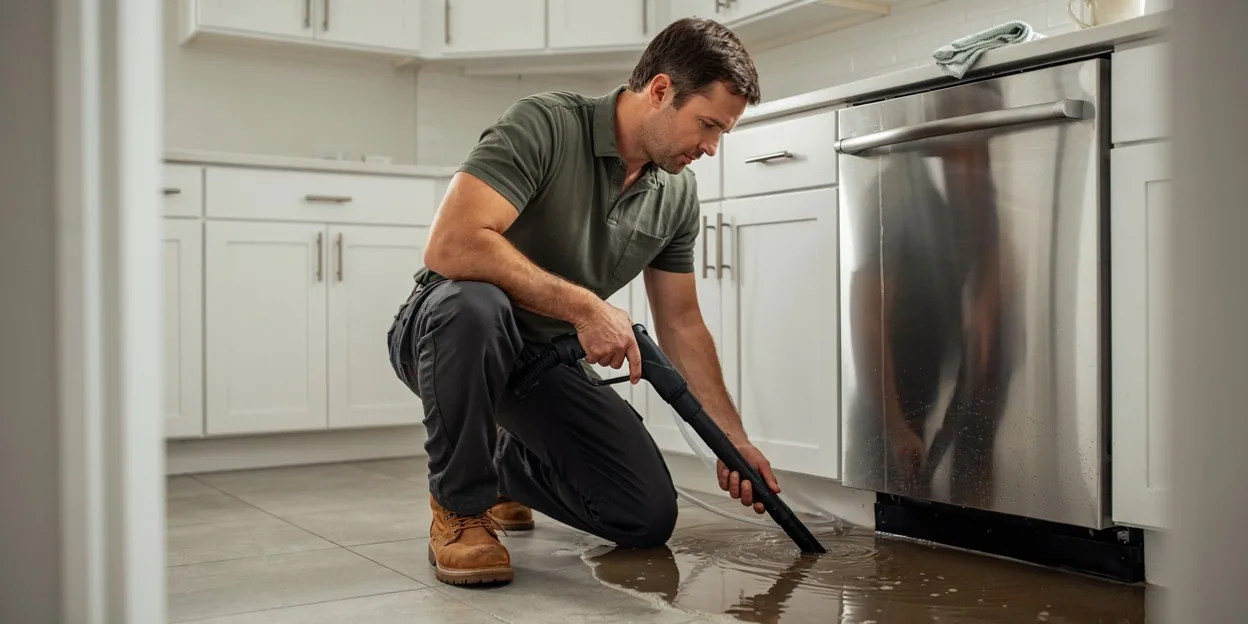
Standing water pumped and vacuumed out of the house, then the first moisture readings to see where it spread across the slab.
Structural Drying
Air movers and dehumidifiers set by the readings, with checks until drywall, subfloor, and framing come back to their dry target.
Leak Detection
Finding a hidden slab, wall, or supply-line leak under a valley tract home before anyone cuts concrete or opens a wall.
Burst Pipe Water Damage
The rooms, floors, and walls a failed or frozen supply line reached, pumped out and dried once the valve is closed.
Roof Leak Water Damage
Wet insulation, ceilings, and walls dried out after a monsoon downpour, a Santa Ana windstorm, or mountain snow got through the roof.
Water Heater Leak Cleanup
A failed tank in a garage, closet, or side yard and the flooring and drywall it soaked before anyone noticed.
Sewage Cleanup
Sewer backup and black-water removal with protective gear, contained disposal, and disinfection of the surfaces it touched.
Appliance Leak Cleanup
Water from a dishwasher, washer, fridge line, or swamp cooler traced under cabinets and flooring, then dried.