Sewage Cleanup in San Bernardino, CA
The shower drain gurgled all week, and this morning the hall bathroom toilet overflowed with water that was not clean. It ran across the tile, into the hall carpet, and under the door of the bedroom next to it. Or the storm pushed mud and street water through the garage and into the family room. This site connects you by phone with an independent local provider who does sewage cleanup in San Bernardino County.
Category 3 water gets a different rulebook
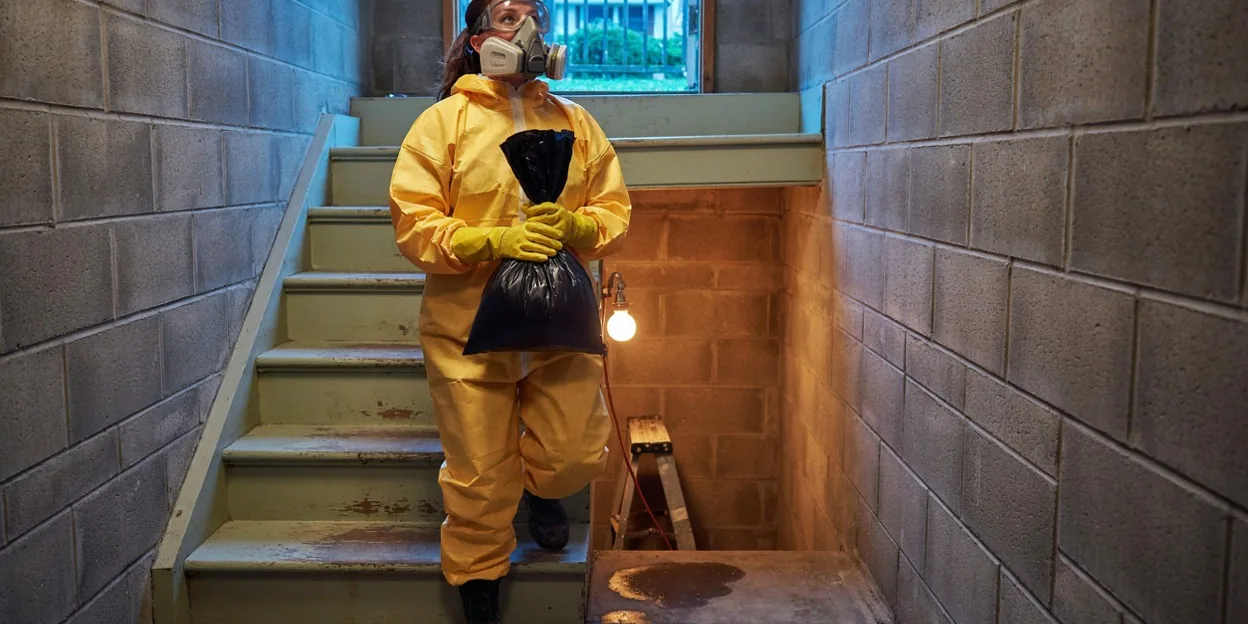
The crew treats the water by what was in it. Sewage, septic overflow, and outside floodwater are Category 3, which means protective gear, containment, and a different rulebook from a clean supply-line leak. They close off the affected rooms from the rest of the house, set up negative air if the job is large, and pump and extract the standing water into a contained tank rather than a floor drain.
Then they remove what cannot be cleaned. Carpet and pad that touched sewage come out. Drywall that wicked it up gets cut above the water line. Once the porous materials are gone, they clean and disinfect the hard surfaces and the framing, and only then does drying equipment go in.
Stop flushing, shut the door, and do not mop
Stop using water in the house. Every flush and every load of laundry adds to what is coming back up. Keep children and pets out of the affected rooms and shut the doors. Turn off the breaker for any room where the water reached an outlet.
Do not run a fan across it, do not mop it into another room, and do not pour bleach on the carpet. If the backup is on the city side, call your city or district sewer line as well; many valley cities keep a 24-hour number for main-line stoppages. Photograph the rooms from the doorway. Then call.
After sewage, porous materials do not get a second chance
Tile, sealed concrete, and framing can be cleaned and disinfected. Carpet, pad, laminate, particleboard cabinet bottoms, and drywall that touched the water come out; there is no drying option for porous materials after sewage. Upholstered furniture that sat in it is usually a loss. Hard furniture and sealed contents can often be cleaned.
Ask the crew how they will confirm the cleaning is complete and what they are doing to dry the framing afterward. That drying is structural drying. If the source turns out to be a slow leak in a drain line under the slab rather than a backup, leak detection finds it before anyone rebuilds over it.
Clay laterals, desert septic, and mud off a burn scar
The county has three kinds of sewage loss. In the valley cities, older clay and cast-iron laterals under 1950s and 1960s tracts in San Bernardino, Colton, and Rialto crack and root in, and the first sign is a shower that drains slowly before the lowest fixture in the house backs up. In the High Desert, much of Hesperia, Apple Valley, and Phelan runs on septic, and a full tank or a failed leach field backs up into the house or pools in the yard. In the mountains, cabins on septic in Crestline and Big Bear City freeze and back up in winter, and the lowest cabin on a shared line takes the hit.
Then there is the water that comes in from outside. After a fire, the first hard rain sends mud, ash, and everything in the street down the slope. The Christmas Day storm in 2003, two months after the Old Fire, filled 33 of the county's 34 foothill debris basins and put mud through homes in Devore and the north end of San Bernardino. Tropical Storm Hilary did the same in Oak Glen, Forest Falls, and Wrightwood in August 2023. That mud is handled as contaminated water, not as dirt.
Many policies exclude sewer backup unless a separate endorsement was added, and outside flood and mud usually need a separate flood policy. Ask the crew to photograph the water line on the walls and the source before anything is removed.
When you call about a sewer backup or a mudflow
Call (909) 494-5349 now and tell us what you see: where the water came up, whether it is still rising, which rooms it reached, and whether it came from a drain, a septic tank, or the street.